I. What Is Laser? — From Physics to Clinical Application
1. The Nature of Laser: A Special Form of Light
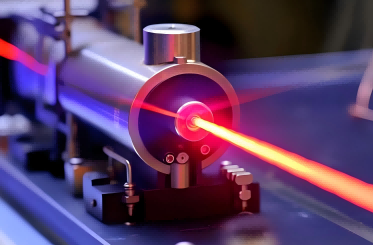
2. How Is Laser Generated?
3. Fundamental Differences Between Laser and Ordinary Light — “Three Advantages & One Superiority”
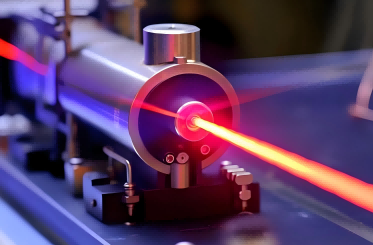
(1) Excellent directionality. Laser propagates in a straight line with an extremely small divergence angle, enabling it to maintain energy density over long distances. In contrast, sunlight radiates in all directions. For instance, when a light-curing lamp irradiates one tooth, adjacent teeth will also be exposed, which results from the poor directionality of ordinary light. Laser pointers for demonstration and laser rangefinders both take advantage of this characteristic.
(3) Good Coherence. Young’s double-slit interference experiment is the classic proof. However, in current clinical stomatology, the direct application significance of coherence remains unclear.
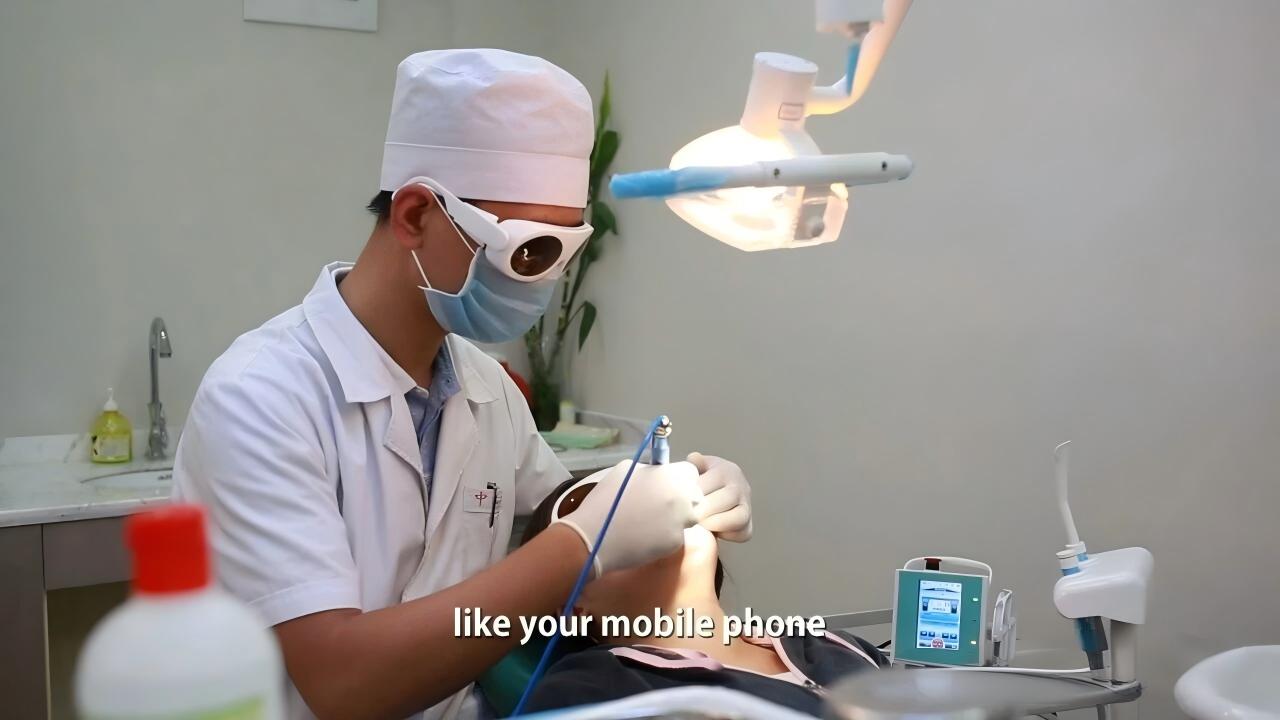
(4) High Brightness. This is the most important characteristic for clinical safety. Concert bulbs have several thousand watts, but they illuminate the entire venue – the energy density per unit area is very low and cannot damage skin. In contrast, laser energy is concentrated at a micron-level focal point. Even if the total power is low, the power density per unit area is sufficient to destroy tissue. This is precisely why protective eyewear must be worn during laser use, laser warning signs must be posted, and the beam must never be directed at the eyes.
 II. Laser Classification and the Brief History of Stomatological Laser Development
Lasers are classified into four major categories by working medium:
| Category | Examples |
|---|---|
| Solid-state lasers | Nd:YAG laser (1064 nm), Er:YAG laser (2940 nm) |
| Gas lasers | CO₂ laser (10600 nm), He-Ne laser (632.8 nm) |
| Liquid lasers | Dye lasers – basically not used in stomatology |
| Semiconductor lasers | Wavelengths such as 650 nm, 810 nm, 980 nm, etc. |
After the ruby laser was introduced in 1960, lasers were quickly applied to medicine – ophthalmology, surgery, and dermatology. However, in the field of stomatology, large-scale clinical application began abroad only after the 1990s, and even later in China – gradually starting after 2000 and becoming more widespread after 2010. Semiconductor lasers are mature in technology, cost-effective, and user-friendly, making them the most popular type of laser in stomatology today.
III. Wavelength Is Identity – Understanding the 980 nm Semiconductor Laser
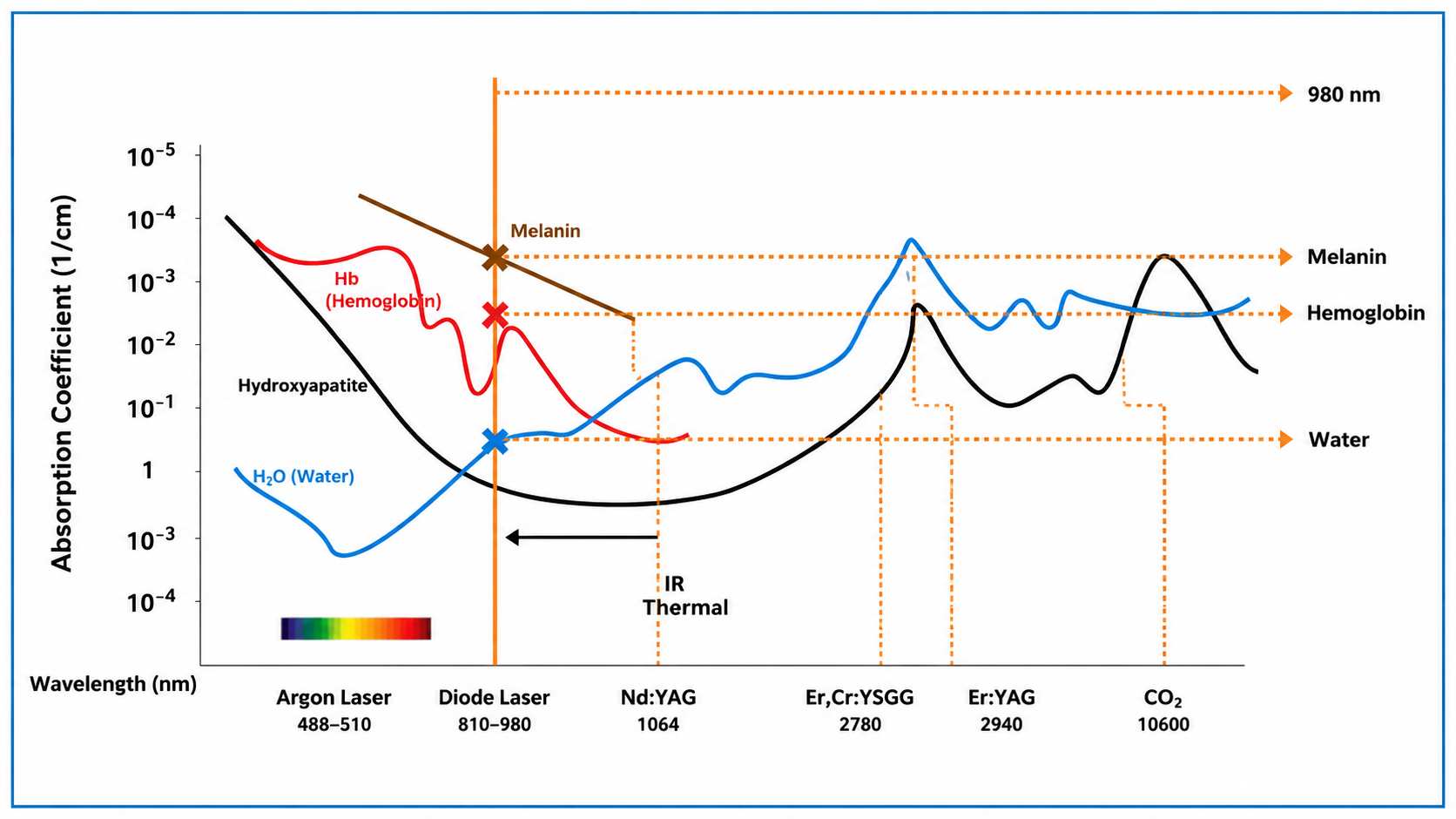
Wavelength determines characteristics, and characteristics determine indications. This is not just a slogan, but the underlying logic of clinical laser application.
The chromophores (i.e., substances that can absorb this laser wavelength) of the 980 nm semiconductor laser include three categories:
-
Melanin / pigments
-
Hemoglobin
-
Water
This combination defines its clinical application boundaries: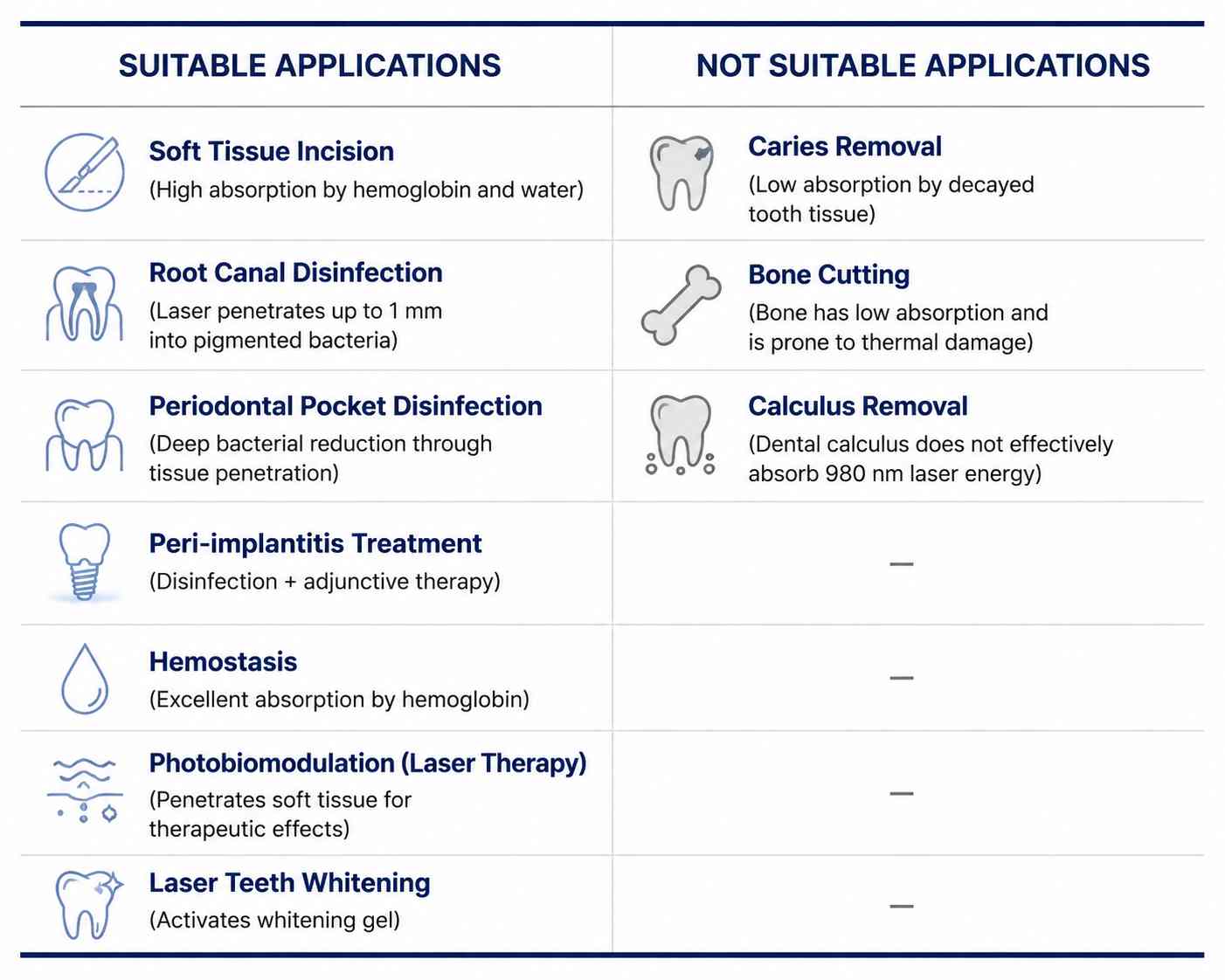 A common misconception: Is a longer wavelength always better? Completely wrong. The 2940 nm erbium laser can sell for over one million yuan, but it has poor penetrative ability and cannot be used for physiotherapy. If your primary clinical needs are soft-tissue surgery and physiotherapy, spending less than 100,000 yuan on a 980 nm semiconductor laser is more than sufficient – the key is what you want to do, not what costs more.
V. Photothermal Effects – Different Temperatures Achieve Different Outcomes
Stomatological laser therapy mainly relies on photothermal effects and photochemical effects, with photothermal effects being absolutely dominant. Depending on the temperature achieved, the outcomes are completely different: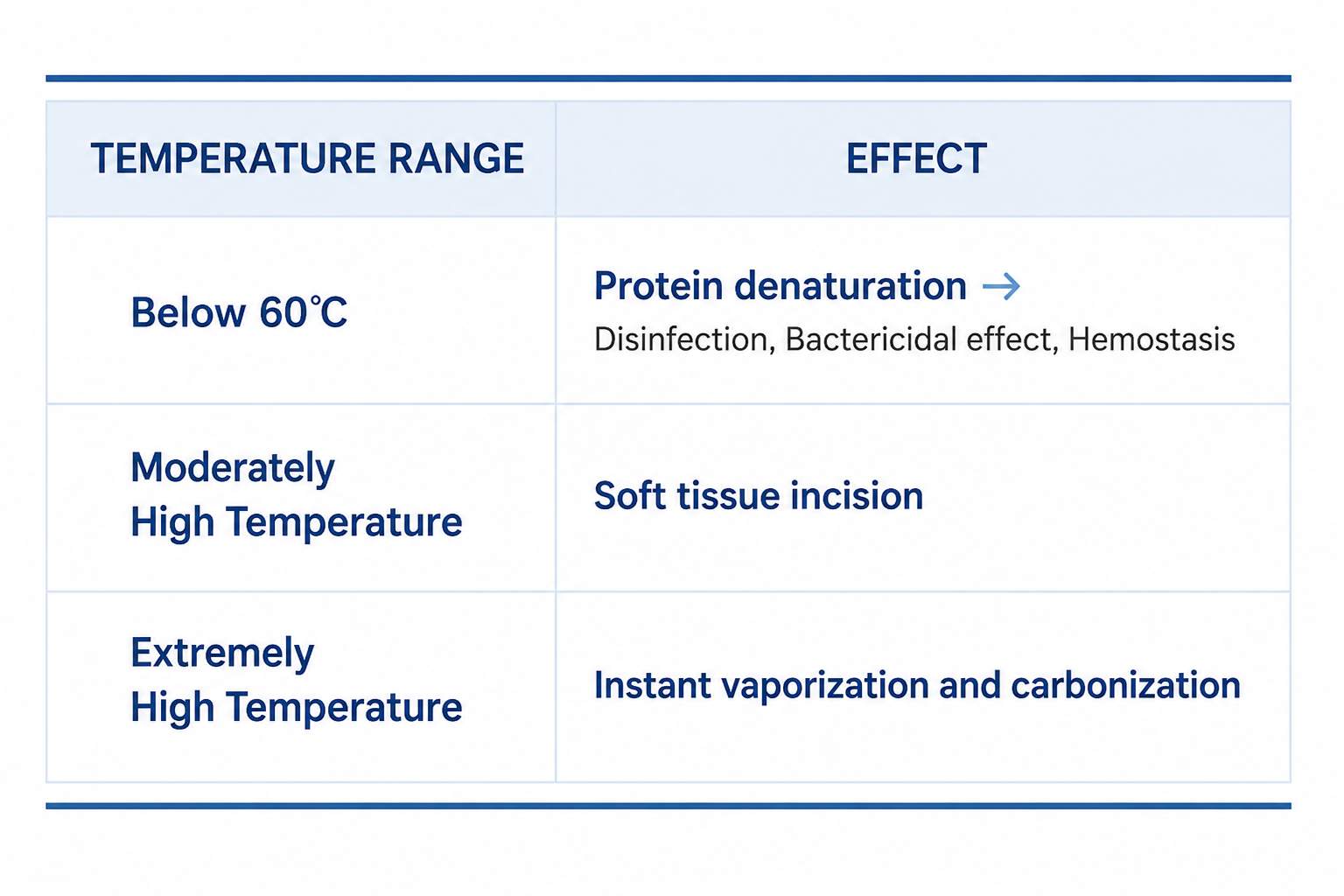
The uses of high and low energy are exactly opposite – this is crucial.
-
High-power (high-energy) laser: cutting, vaporizing tissue.
-
Low-power (low-energy) laser: stimulating cell growth, promoting healing, reducing inflammation, relieving pain – this is what we call physiotherapy or low-level laser biostimulation.
If you feel that the physiotherapy effect is not good and you increase the power, that would be wrong – increasing it turns stimulation into destruction. If the physiotherapy effect is unsatisfactory, you should check your operating technique (distance, speed, time, and application method) rather than simply increasing the power.
VI. Understanding the Laser Control Panel – Parameter Explanation
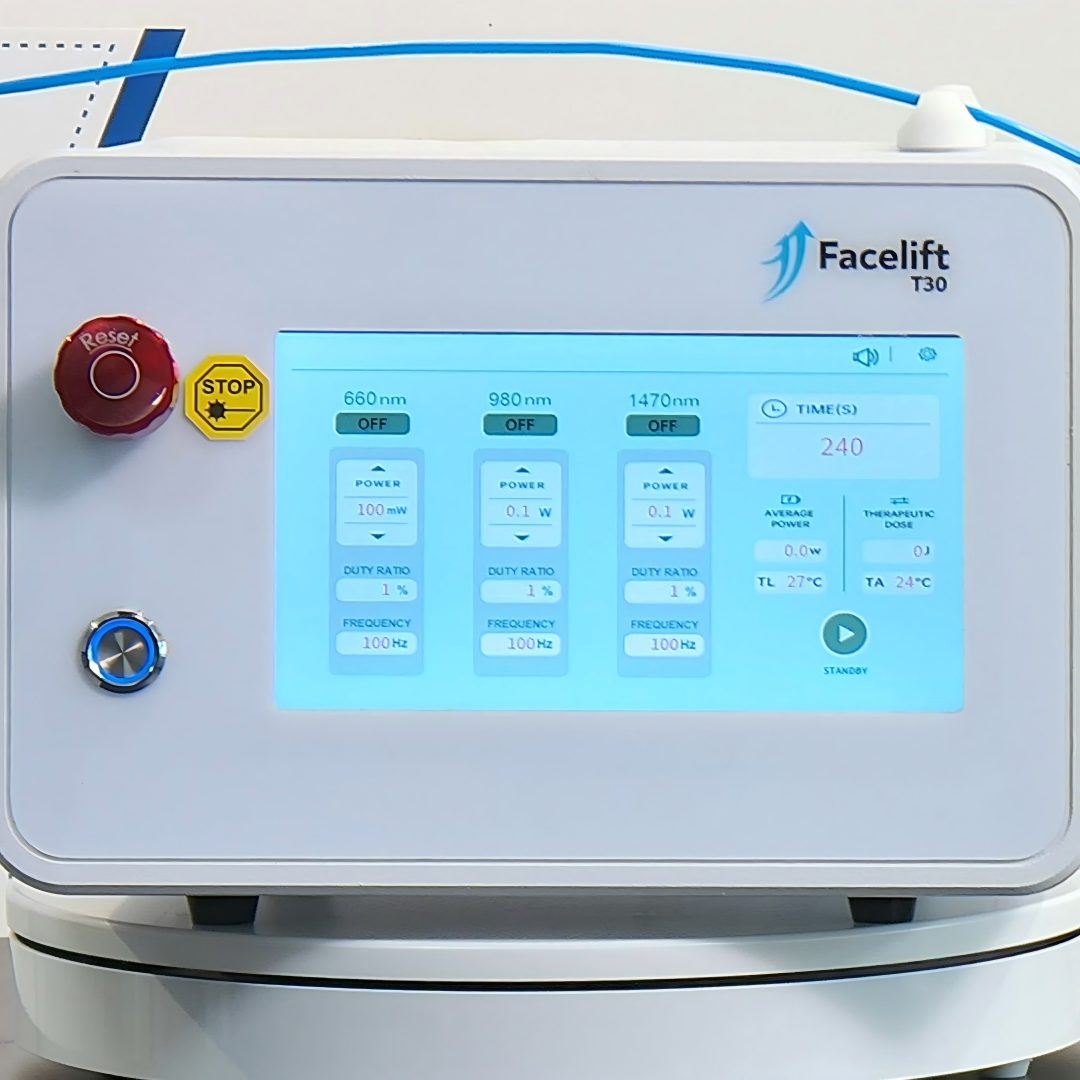
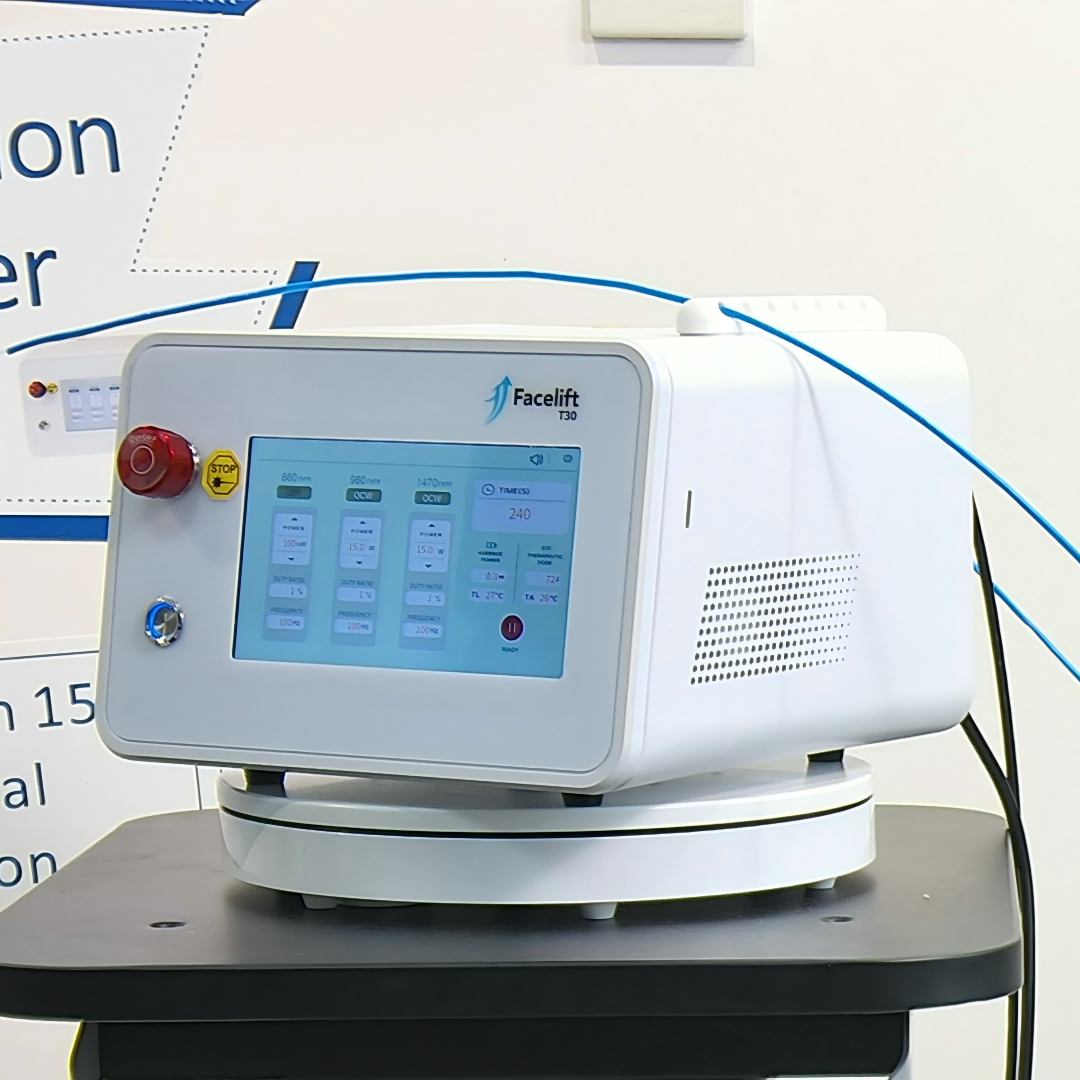
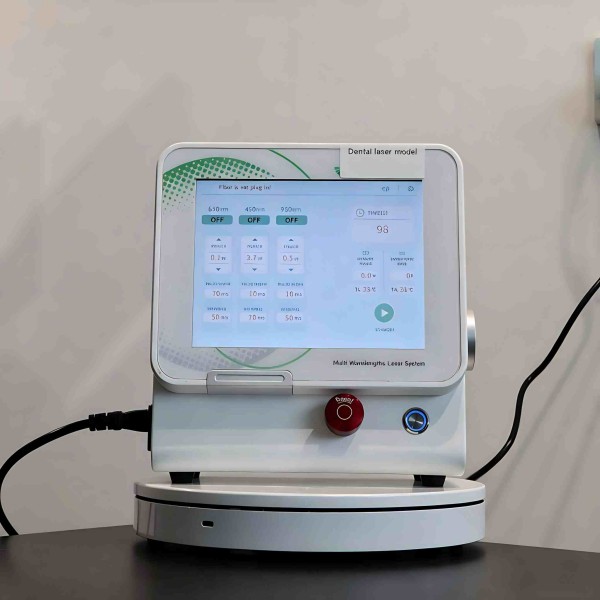
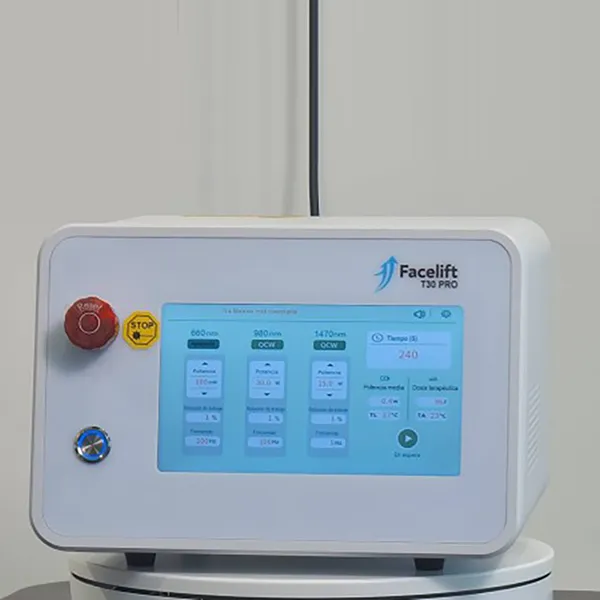
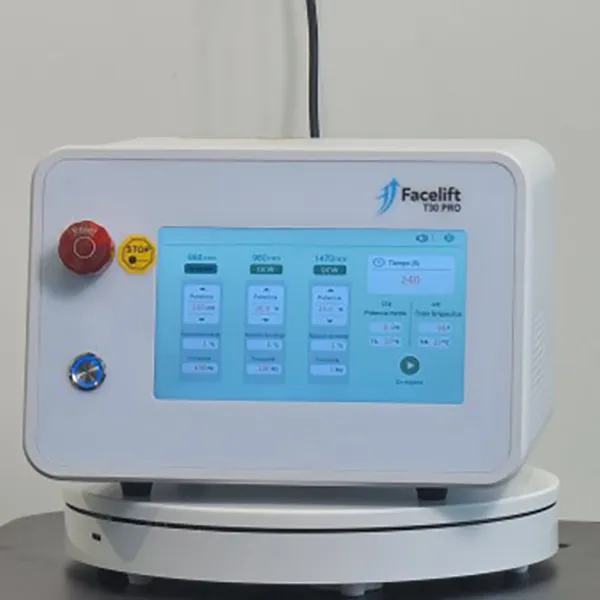
Many doctors are reluctant to adjust parameters because they do not know what will happen if they do. In fact, the laser parameter system is very straightforward, requiring only an understanding of the following core concepts:
(1) Power (unit: Watt – W)
Represents the output intensity of the laser. The higher the power, the greater the energy emitted per pulse. Changing from 2 W to 4 W increases cutting speed.
(2) Energy (unit: Joule – J)
Represents the total work done by the system. When the foot pedal is pressed to emit the laser, the energy value accumulates additively. The value displayed on the interface is typically the cumulative total.
(3) Frequency (unit: Hertz – Hz)
Represents the number of laser emissions per second. For example, 4000 Hz means emitting 4000 pulses per second. The higher the frequency, the more emissions per unit time and the greater the work efficiency. However, increasing frequency also means shorter cooling intervals between emissions – heat accumulation increases, and the risk of thermal damage also rises.
(4) Operating Modes: Continuous Wave vs. Pulsed Wave
| Mode | Description | Advantage | Disadvantage |
|---|---|---|---|
| Continuous Wave (CW) | Laser emits continuously without interruption | Fast cutting | No cooling interval |
| Pulsed Wave | Emits, pauses, emits again | Cooling intervals between pulses | Slightly slower cutting |
In continuous mode, frequency cannot be adjusted because the concept of frequency is “number of emissions per second” – with continuous emission, there is no “number of times” to speak of. Pulsed mode is suitable for operations on heat-sensitive tissues.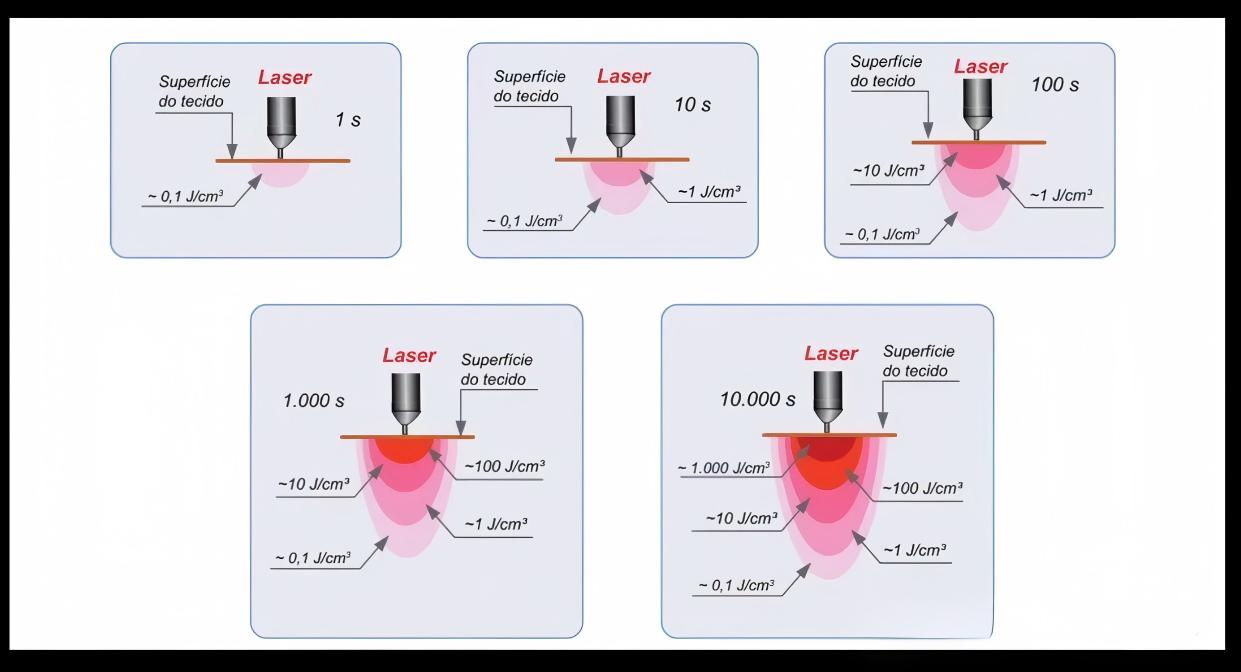
VII. The Essence of Carbonization (Fiber Activation) and Clinical Judgment
Carbonization (also called activation or “priming”) is the most central concept in semiconductor laser operation and is often the “watershed” that determines the effectiveness of many practitioners’ procedures.
What is Carbonization?
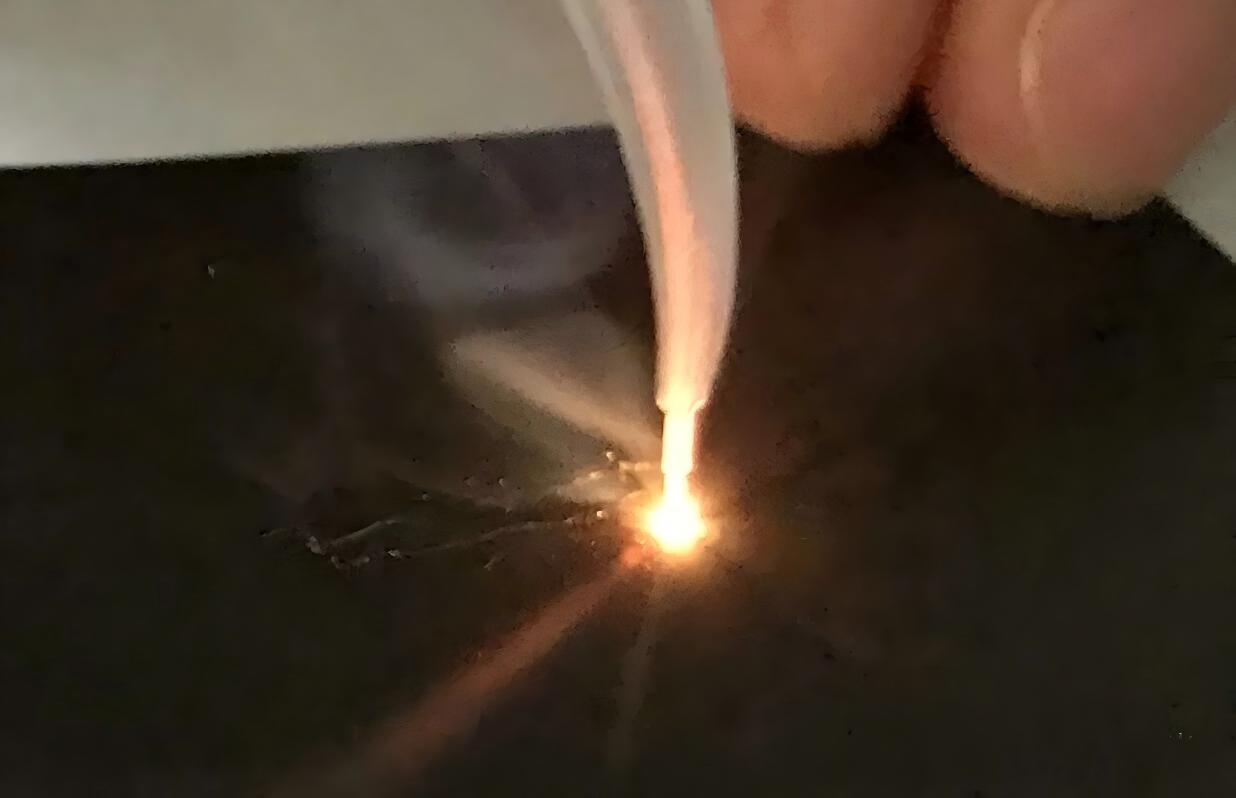
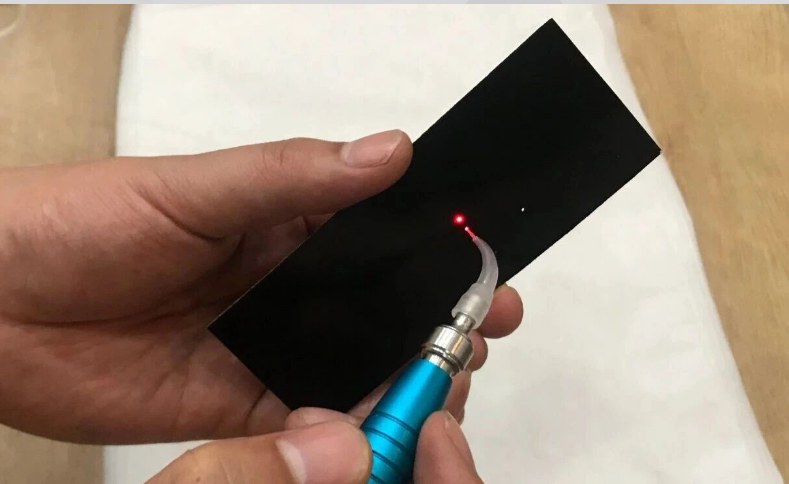
It involves placing the fiber tip on a black material (articulating paper or the black area on a dental X-ray film) so that the fiber tip turns black, thereby enhancing absorption of laser energy and concentrating the energy at the tip with high intensity.
Clinical Choices Between Carbonization and Non-Carbonization:
| Clinical Need | Carbonization Required? | Reason |
|---|---|---|
| Soft-tissue cutting | Yes | Concentrates energy at the tip for precise incision |
| Granulation tissue removal | Yes | Enhances ablation efficiency |
| Coagulation, hemostasis | Yes | Increases thermal effect for sealing vessels |
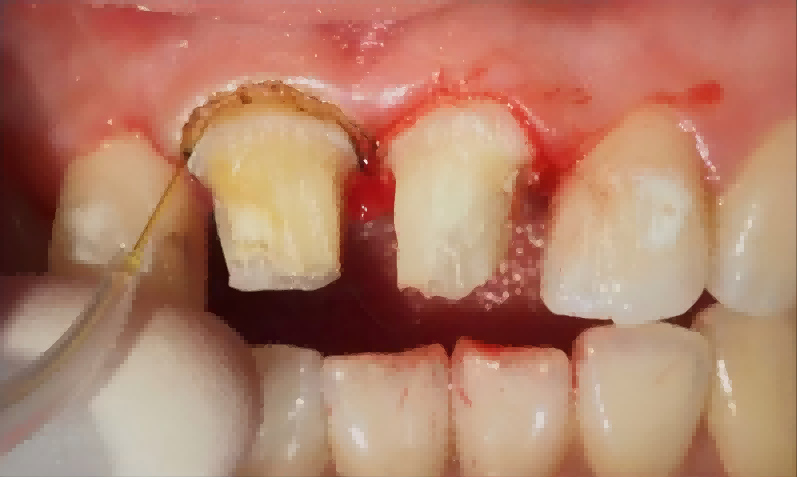
| Gingival retraction | Yes | Creates precise tissue separation |
| Root canal disinfection | No | Needs energy to penetrate into the canal |
| Periodontal pocket disinfection | No | Requires broad antimicrobial effect |
| Physiotherapy / biostimulation | No | Needs deeper tissue penetration |
| Mucosal ulcer treatment | No | Needs gentle surface effect |
A Simple Memory Aid:
If you want energy to concentrate at one point for a localized effect → carbonize.
If you want the laser to penetrate deeper for a broader effect → do not carbonize.VIII. The Essence of Soft-Tissue Cutting Technique – Perforation-Link Cutting
Many doctors report that “the laser does not cut well.” The core reasons are often twofold: first, failure to carbonize the fiber tip; second, incorrect operating technique.
Correct Soft-Tissue Cutting Technique – Perforation-Link Cutting:
Step 1: Mark the points. Use a probe to mark the boundary to be excised.
Step 2: Carbonize the fiber. Tap the fiber tip on articulating paper to turn it black.
Step 3: Make dense perforations. Along the marked line, use the laser to create holes at key positions – each hole is a brief irradiation, equivalent to using the laser to “dot” a spot incision.
⚠️ Important Note: This 980 nm semiconductor laser allows pressure application without worrying about fiber breakage (but confirm with the manufacturer before use – not all lasers can withstand pressure).
Step 4: Connect the dots. Cut the tissue between the holes to complete the excision.
Why is Perforation-Link Cutting Better Than Direct Dragging Cuts?
Advantage Explanation Precise positioning The position of each hole is predetermined and controlled Shorter total time Overall operating time is reduced Less heat accumulation Faster completion means less thermal spread to surrounding tissue Milder postoperative reaction Less thermal damage, faster healing Another Reason for Slow Cutting: Wrong Direction
When excising a mucocele, if you lift the tissue with forceps and cut along the same direction, you may inadvertently cut deeper and deeper, prolonging the excision time.The correct technique is to cut toward the center from all directions. This allows better directional control and prevents overpenetration.
IX. Optical Fiber Protection & Equipment Selection — Why Some Lasers Can Last Five Years
The value of laser equipment lies not only in its performance but also in its long-term maintenance costs.All lasers that deliver the beam via optical fiber (including diode lasers, erbium lasers and Nd:YAG lasers) share one vulnerability: optical fibers are fragile and prone to fracture from bending.
Once an optical fiber breaks, it has to be replaced, and a single fiber can cost thousands of yuan.This is exactly why many clinics end up leaving their lasers idle: fiber breakage leads to prohibitively high replacement costs, so clinics simply stop using the equipment.
Key Selection Criteria
Factor Why It Matters Fiber Protective Layer Fibers equipped with a metal protective sheath or special protective coating are less prone to breakage, ensuring long-term serviceability. Startup Speed Excessively long startup time reduces routine clinical adoption. User Interface Touchscreen operation and intuitive parameter adjustment boost clinical efficiency. Parameter Flexibility Convenient adjustment of power, frequency and modes enables adaptation to diverse clinical indications. A high-quality diode laser should be ready for operation within tens of seconds, featuring touchscreen controls and intuitive parameter tuning.